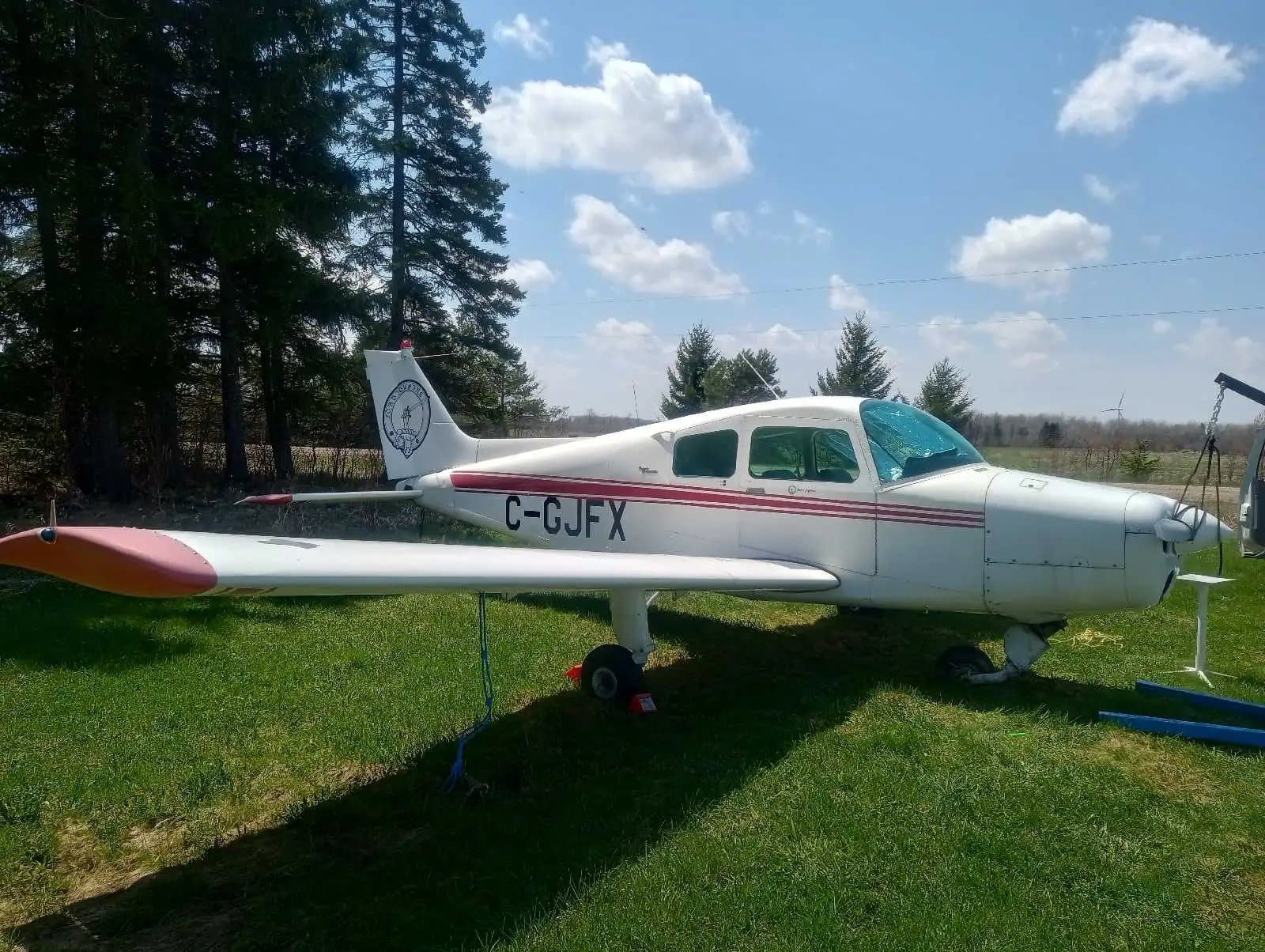
C-FPCD is a 1972 Beech B99 (2 engines) based in Prince Albert (CYPA), Saskatchewan, listed on the Transport Canada Civil Aircraft Register (serial U-151).
Airframe typeWhether Transport Canada classes it as an aeroplane, a helicopter, a glider, a balloon or a gyroplane.Aeroplane
Engine typeHow the engine makes power. Piston engines run on avgas like a car engine; turboprops and jets burn turbine fuel, cost far more to overhaul, and are usually reserved for bigger or faster aircraft.Turbo Prop
Engines2
Max take-off weightMaximum take-off weight: the heaviest the aircraft may legally be when it starts its take-off roll, including fuel, people and baggage. It's the number that decides what licence and ratings you need, and what it costs to park.4,941 kg · 10,893 lb
Where it's based
BasedThe city or airport Transport Canada holds as the aircraft's base. Where the field holds a four-letter code like CYXE, that's the airport's ICAO identifier.Prince Albert (CYPA), Saskatchewan
Transport Canada officeThe Transport Canada regional office that administers this registration. It follows the owner's address, so it isn't always the nearest office to where the aircraft actually sits.Winnipeg
Identity
Serial numberThe manufacturer's own number for this individual airframe, stamped on a plate. Unlike the registration, it never changes — it identifies the aircraft across every country it's ever been registered in.U-151
ManufacturerThe full legal name of the company that built it, which is often not the name on the tail. A Cessna 172 built in 2022 was made by Textron Aviation.Beech Aircraft Corporation
Built inWhere the aircraft was manufactured. Most of Canada's fleet was built in the United States.U.S.A.
ICAO 24-bit addressA unique 24-bit number your transponder broadcasts with every Mode S and ADS-B message — flight trackers key on it rather than the tail number. Canada's block runs C00000 to C3FFFF, which is why Canadian aircraft nearly all start C0 to C3. Transport Canada assigns it against the registration, so it changes if the aircraft is re-registered.C027D4
Registration
Registration typePrivate, Commercial or State. Commercial means the registration permits use for hire or reward — charter, flight training, aerial work. It describes the registration, not who owns the aircraft.Private
AirworthinessThe standard certificate: the aircraft conforms to its approved design and is maintained by a licensed engineer. No restrictions beyond the type's own, and it's what buyers and lenders expect to see.Certificate of Airworthiness
Basis of registrationThe rule the aircraft is registered under. Most are registered against a type certificate, meaning they're a factory design approved by the regulator; amateur-built and ultralight aircraft come in under their own standards.CAR Standard 507.02, 507.03 - Type Certificate
Type certificateThe approval number for the aircraft's design, issued to the manufacturer. Every aircraft built to that approved design shares it, so it's a good way to confirm exactly which variant you're looking at.A14CE
Registered sinceWhen the current registration took effect. A recent date usually means the aircraft changed hands or was re-registered — it is not the date it was built.31 March 2026
Where C-FPCD is, and how to track it
C-FPCD transmits ADS-B under the 24-bit address C027D4. Trackers key on that address rather than the tail number, so it finds the aircraft even on flights flown under a different callsign. Transport Canada assigns the address against the registration, so it changes if the aircraft is re-registered.
Most private aircraft are on the ground most of the time — if a tracker shows nothing, it is very likely parked rather than missing.
The Beech B99 is very rare in Canada — there are 1 registered on the Transport Canada Civil Aircraft Register.
Median year built in Canada's turboprop category: 1998 — C-FPCD is older than half of that fleet.
One of 856 Beech aircraft on the Canadian register, across every model.
One of 1,904 aircraft in Canada's turboprop category, 167 of them in Saskatchewan.
7 aircraft are based in Prince Albert (CYPA) — see every one →
Not for sale right now
C-FPCD is not listed on MarketPlane. If it ever is, we can tell you — one email, then nothing. No account needed.
Reported occurrences
Transport Canada has 33 reports on file mentioning C-FPCD (2001–2019). One records damage. The other 32 are filed with no damage recorded — that category covers bird strikes, air-traffic events and equipment reports, which are logged whether or not anything was harmed.
Transport Canada describes CADORS entries as preliminary and unsubstantiated, and subject to change. Reports reach the system when somebody files one, so an empty or quiet record is not proof an aircraft has never been damaged — it is not a title search, an airworthiness-directive check or a substitute for a pre-purchase inspection or a look at the logbooks. 5 entries have a Transportation Safety Board file number; those are investigated separately and the TSB publishes its own reports. Source: Transport Canada, Civil Aviation Daily Occurrence Reporting System (CADORS), under the Open Government Licence – Canada.
List C-FPCD on MarketPlane.ca — free, no commission, and Canadian buyers contact you directly. We already have the year, make, model, serial and engine from the register, so the form opens mostly filled in.
Canadian Civil Aircraft Register, current to September 17, 2026. Aircraft data reproduced and distributed with the permission of the Government of Canada. MarketPlane.ca is not affiliated with Transport Canada.